
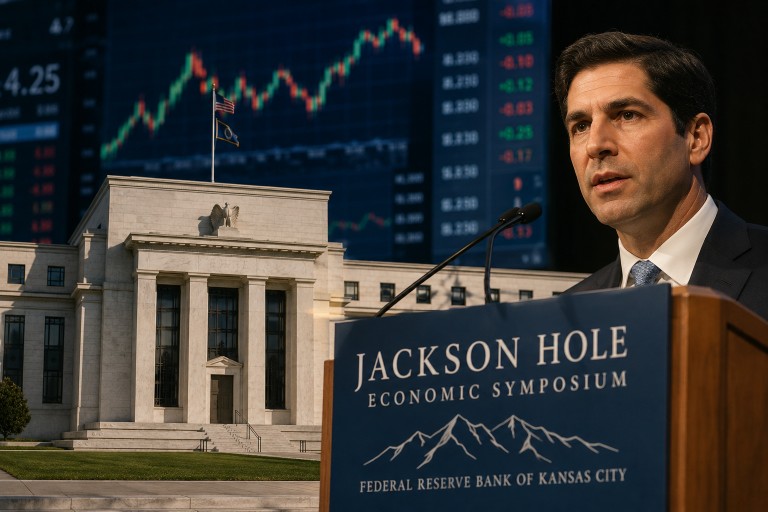
All eyes are on US Federal Reserve Chair Kevin Warsh’s upcoming address at the Jackson Hole symposium, where investors are eager for insights into the direction of interest rates, inflation, and the impact of rising Treasury yields on monetary policy. Warsh’s recent shift away from detailed forward guidance has led to increased uncertainty, prompting market participants to pay closer attention to economic indicators. This change in approach comes as inflation remains above the Federal Reserve’s target of 2%, raising questions about the central bank’s next steps.
The landscape has grown more complex with the recent rise in long-term Treasury yields. Many investors argue that these higher yields might already be tightening financial conditions, which could potentially diminish the need for further rate hikes. This development has heightened interest in how the Federal Reserve will navigate these challenges while attempting to steer inflation back to its intended target.
Adding to the intrigue, the US Treasury’s decision to increase its buybacks of long-dated bonds following a sell-off has caught market attention. While officials maintain that this move is designed to bolster market liquidity, investors perceive it as an effort to alleviate pressure on long-term borrowing costs. This dynamic raises questions about the interplay between bond market conditions and the Federal Reserve’s policy decisions.
As Warsh prepares to deliver his speech, market participants are keen to discern whether the Federal Reserve will commit to additional rate hikes or adopt a different strategy to manage inflation. The Jackson Hole address is expected to provide crucial signals regarding the future path of US monetary policy and its relationship with evolving bond market trends.
