
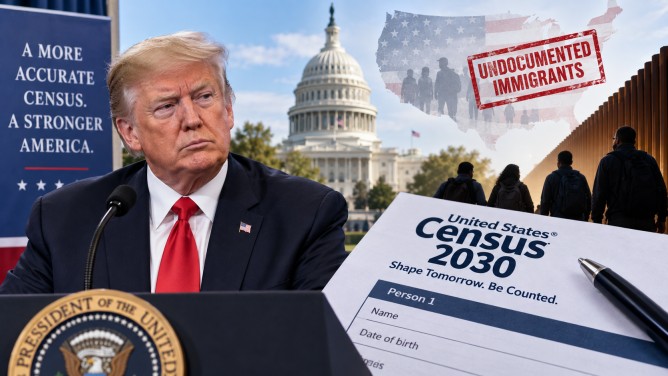
The Trump administration has put forward a proposal to modify the US census by excluding undocumented immigrants from the official population count. This initiative could have a major impact on the allocation of federal resources and the apportionment of congressional districts across the country. While lawful permanent residents will still be counted, undocumented immigrants and individuals in certain non-permanent immigration categories may be omitted under this plan.
Traditionally, the US census, which occurs every decade, has included all individuals residing in the country, regardless of their citizenship or immigration status. The data collected plays a crucial role in determining how federal funding is distributed and how many seats each state secures in the House of Representatives. The Census Bureau is considering leveraging government administrative records to assess the legal status of those included in the census count.
In addition to changes regarding immigration status, the administration is also exploring revisions to questions about race and ethnicity. These modifications are being considered due to concerns about the relevance and sensitivity of the information gathered. Such changes could influence the demographic data that is vital for governmental and policy-making purposes.
The proposal is likely to encounter legal opposition from Democrats and advocacy groups, who maintain that the Constitution mandates the census to enumerate all individuals living in the United States. These groups argue that any exclusion of undocumented immigrants is unconstitutional and undermines the objective of the census.
