
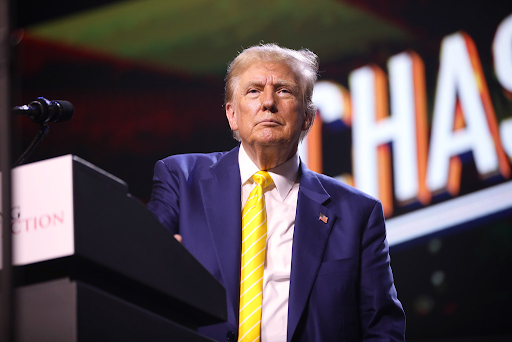
The United Kingdom finds itself in an awkward and uncertain position Saturday after President Trump announced a 15% universal tariff on all imports, effectively overriding the separate 10% arrangement the UK had previously negotiated with Washington. British trade officials are now faced with the challenge of figuring out what comes next.
William Bain of the British Chamber of Commerce made clear the UK’s frustration, calling the new tariff “bad for trade, bad for US consumers and businesses, and weakening for global economic growth.” He said businesses on both sides of the Atlantic urgently need clarity and certainty — something the escalating tariff environment has consistently failed to provide.
Trump announced the new rate on Truth Social just hours after the Supreme Court struck down his IEEPA-based tariff authority in a 6-3 ruling. He pivoted immediately to Section 122 of the Trade Act of 1974, a never-before-used provision that allows tariffs of up to 15% for 150 days without congressional approval. His administration plans to develop permanent tariff policy during that window.
Trump’s fury at the ruling was visible. He called the decision “ridiculous” and “anti-American,” branded majority justices as “fools and lapdogs,” and attacked his own nominees Barrett and Gorsuch with particular venom, calling them “an embarrassment to their families” and saying they were “barely” welcome at next week’s State of the Union. He praised dissenters Kavanaugh, Thomas, and Alito as courageous.
European leaders joined the UK in calling for stability. Germany’s Chancellor Merz described tariff uncertainty as “poison” and announced a trip to Washington with a coordinated EU position. France’s Macron emphasized the importance of reciprocal trade rules. About 90% of the $130 billion collected in tariffs so far has been paid by US businesses and consumers. Exemptions cover critical minerals, metals, pharmaceuticals, and USMCA-compliant goods.
