
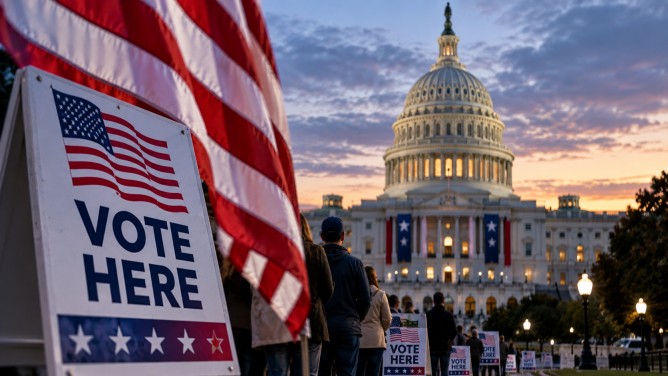
The 2026 U.S. midterm elections are approaching a pivotal moment as Republicans work to defend their majorities in Congress, while Democrats aim to leverage President Donald Trump’s low approval ratings and ongoing inflation concerns. With the election date set for November 3, campaigning is expected to ramp up significantly after Labor Day, leaving about two months for candidates to sway voters. Recent polls indicate that Democratic contenders are competitive in several critical House and Senate races, prompting election analysts to adjust their forecasts in favor of the Democrats.
Historically, the party occupying the White House often loses seats in Congress during midterm elections, as these elections serve as a platform for voters to express dissatisfaction with the current administration. This historical trend poses a significant challenge for Republicans, who are striving to maintain their control over Congress. Democrats hope that economic issues, particularly inflation, along with discontent with Trump’s policies, will motivate voters to head to the polls. Despite these challenges, Trump and Republican leaders remain optimistic about overcoming the traditional midterm disadvantage to preserve their majorities.
Republicans currently benefit from a substantial financial edge, with Trump-aligned groups holding substantial funds to back their candidates. Additionally, redistricting efforts in Republican-controlled states could potentially safeguard certain seats by altering congressional maps advantageously. This financial and structural support may prove crucial in a tightly contested electoral environment.
The 2022 midterm elections serve as a recent example of how political dynamics can shift unexpectedly. Many anticipated significant Republican gains due to high inflation and dissatisfaction with the Democratic administration at the time. However, Democrats performed better than expected, aided by the Supreme Court’s decision to overturn the constitutional right to abortion, which galvanized Democratic voters and mitigated Republican advances.
With Trump now at the helm in the White House and actively participating in the midterm campaign, both parties are gearing up for a fiercely contested election. The outcome could significantly impact the direction of Trump’s administration during its concluding two years, making this election cycle one of considerable consequence for both Republicans and Democrats alike.
