
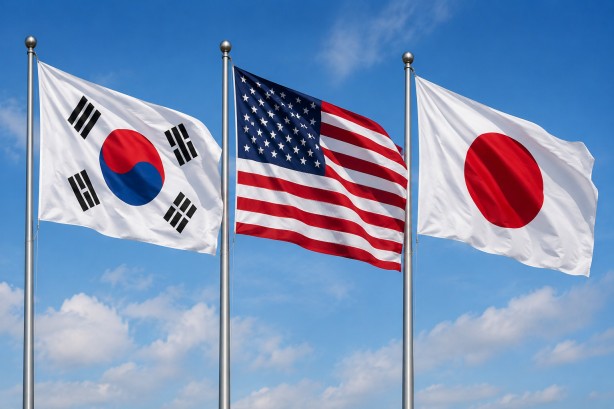
In a display of unified resolve, the foreign ministers of South Korea, the United States, and Japan have pledged to bolster their security stance against North Korea. Meeting in Manila during the ASEAN-related ministerial sessions, the officials emphasized the importance of a strong deterrence posture while also committing to enhance trilateral cooperation in regional security, economic resilience, and the advancement of emerging technologies.
South Korean Foreign Minister Cho Hyun, U.S. Secretary of State Marco Rubio, and Japanese Foreign Minister Toshimitsu Motegi stressed the necessity of maintaining close coordination on North Korea policy. They reiterated their dedication to pursuing the denuclearization of the Korean Peninsula through diplomatic dialogue, supported by credible deterrence efforts. This united front aims to address the ongoing challenges posed by North Korea while fostering peace and stability in the region.
Beyond North Korea, the ministers addressed broader regional and global security issues, including current developments in Northeast Asia and the Middle East. They collectively underscored their support for the principles of freedom of navigation and overflight, adherence to international law, and the promotion of enhanced maritime security throughout the Indo-Pacific region.
In terms of economic security, the three nations agreed to intensify their collaboration in several key areas. These include nuclear energy, critical minerals, and ensuring the resilience of supply chains. Together, they plan to advance cooperation in cutting-edge technologies and implement measures to counter economic coercion. Additionally, they emphasized the importance of joint efforts in disaster relief, humanitarian assistance, and tackling transnational crime.
The meeting highlighted the commitment of South Korea, the United States, and Japan to expand practical cooperation and hold regular consultations. This ongoing dialogue aims to effectively address shared security and economic challenges, reinforcing the strategic alliance among the three countries.
