
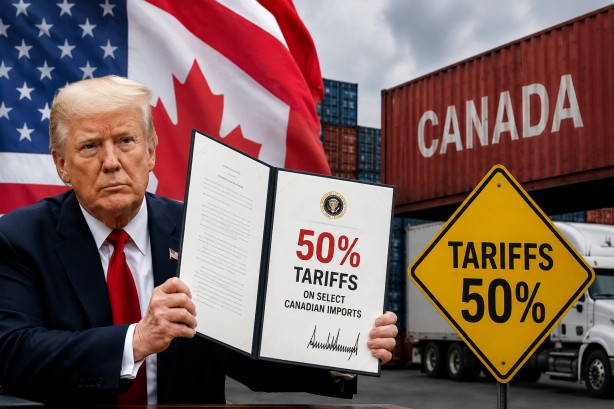
President Donald Trump has sanctioned new tariffs of 50% on a selection of Canadian imports, citing what he perceives as discriminatory policies against American products by Canada. This decision targets a range of goods, including automotive materials, dairy products, and alcoholic beverages, as trade discussions under the United States-Mexico-Canada Agreement (USMCA) persist.
The Trump administration argues that these tariffs are necessary to counteract unfair trade practices that negatively impact U.S. industries. The tariffs were implemented through a series of executive orders, signaling the administration’s intent to apply further pressure on the ongoing trade negotiations between Washington and Ottawa, particularly concerning issues of market access.
The introduction of these tariffs could place additional strain on the economic relationship between the United States and Canada. Businesses and exporters on both sides of the border are now closely monitoring the situation, especially awaiting Canada’s response to these new trade measures and assessing the potential repercussions for North American trade dynamics.
These developments come at a critical time, as the two countries continue to navigate complex trade relationships under the USMCA framework. The U.S. move is likely to escalate tensions, potentially complicating efforts to reach a mutually beneficial trade agreement. The outcome of these negotiations will be pivotal in shaping future economic interactions between the neighboring nations.
