
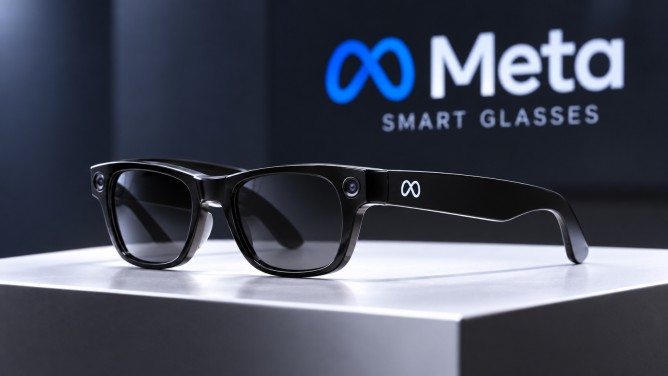
Law enforcement agencies across the United States are expressing growing concerns about the potential misuse of Meta’s camera-equipped smart glasses. These devices, which resemble regular Ray-Ban or Oakley eyewear, could be used to discreetly record police officers, secure facilities, and sensitive operations, raising alarms about privacy and security. Internal documents reveal that authorities are worried about the glasses being employed to capture footage within restricted areas without detection.
The New York Police Department’s counter-terrorism unit has specifically warned officers about the risk of these smart glasses being utilized to gather sensitive information within detention facilities. This includes the possibility of recording cell layouts, camera positions, and patrol patterns. This alert was issued after online videos surfaced, purportedly showing individuals filming inside a detention center without drawing attention. Similar warnings have been issued by authorities in Maine and other states, who fear that AI-enabled features like facial recognition could be exploited to identify officers and access publicly available information about them.
Federal agencies are also taking steps to address these concerns. The US Immigration and Customs Enforcement has categorized smart glasses as body-worn cameras, prohibiting their use in federal workspaces due to the risk of unintentionally capturing or transmitting sensitive information. There is also a focus on the threat of these devices being used for reconnaissance ahead of criminal activities or terrorist acts. A previous warning cited the New Orleans attack, suggesting the assailant might have employed smart glasses to survey the area in advance.
Meta, the company behind these smart glasses, has responded by noting that the devices feature a white LED that illuminates when photos or videos are being recorded, and this function cannot be disabled. Additionally, Meta argues that similar recordings could be made using standard devices like smartphones. This situation underscores a broader debate surrounding AI-powered surveillance technology, privacy, and the public’s capacity to document law enforcement actions. Privacy advocates contend that surveillance tools should not be the exclusive domain of authorities, emphasizing the importance of allowing individuals to record official activities.
