
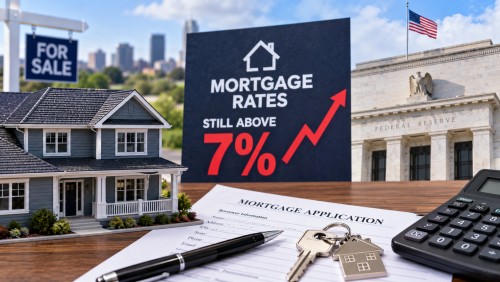
The average U.S. mortgage rates continue to hover above 7% despite the Federal Reserve’s recent decision to increase its interest-rate target. As of September 17, 2026, the 30-year fixed mortgage rate was 7.37%, while the 15-year rate was 6.62%, reflecting a significant rise from earlier this year when the 30-year rate was 5.75% in March.
The Federal Reserve’s decision to adjust its target interest-rate range to 3.75%–4% is part of its ongoing effort to manage inflation, which remains above its 2% target. However, mortgage rates are influenced by more than just the Fed’s policy rate; they are also affected by market dynamics, inflation expectations, and investor demand. Consequently, changes in the Fed’s rate do not directly translate into equivalent shifts in mortgage rates.
Prospective homebuyers face increased borrowing costs, but some may still secure rates below the national average based on factors like credit score, down payment, lender, and loan terms. Options like paying mortgage points upfront can offer lower interest rates but increase closing costs. Additionally, adjustable-rate mortgages present another possibility, though their rates may change after the initial period.
As refinancing becomes more costly, with average rates reaching 7.41% for a 30-year refinance and 6.75% for a 15-year refinance as of mid-September, homeowners with existing loans at lower rates might find refinancing unattractive unless the potential savings justify the expense.
The trajectory of future mortgage rates will depend on the broader economic conditions, inflation trends, and financial markets, alongside expectations regarding further Federal Reserve actions. While there is potential for rate changes, there is no assurance that waiting will lead to more favorable borrowing costs. Homebuyers and homeowners must weigh their current financial situations against the uncertainty of future rate movements.
