
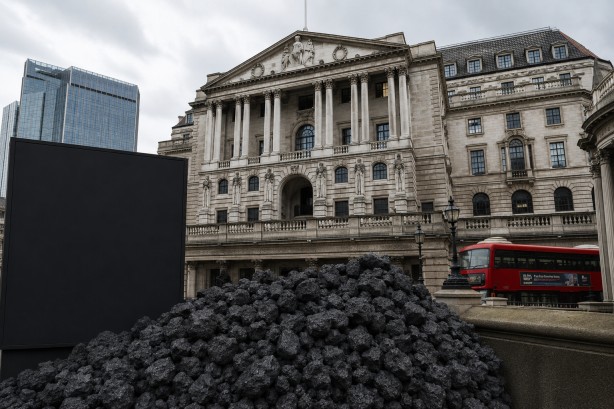
The Bank of England is set to stop accepting bonds tied to thermal coal companies as collateral in its lending operations starting this October. This move is a crucial step towards addressing the financial risks associated with climate change, signaling a shift in how the central bank manages its exposure to environmentally harmful industries.
Commercial banks often use bonds as collateral when borrowing from the central bank to maintain liquidity and facilitate daily transactions. However, under the new policy, any bonds connected to thermal coal—the fossil fuel commonly used in power generation—will be deemed ineligible. This decision reflects the growing financial risks that companies involved in thermal coal face, as global efforts to transition to cleaner energy and achieve net-zero emissions gain momentum. Such coal-related assets are at risk of depreciating over time.
In addition to excluding thermal coal bonds, the Bank of England’s policy allows for the application of discounts to bonds from other sectors that are vulnerable to climate-related risks. This approach aims to safeguard the central bank’s balance sheet from potential devaluation as climate risks evolve.
Environmental advocates have praised the Bank of England’s decision, viewing it as a powerful message to financial markets that could prompt commercial banks to reassess their exposure to industries with high pollution levels. Already, more than 150 prominent financial institutions globally have implemented restrictions on dealings with the thermal coal sector.
Experts highlight that the success of this policy will largely depend on the methodology used to assess climate risks and whether similar restrictions will be extended to other industries with significant environmental impacts in the future.
